Mountain Home Performance: A Guide for Colorado Homeowners
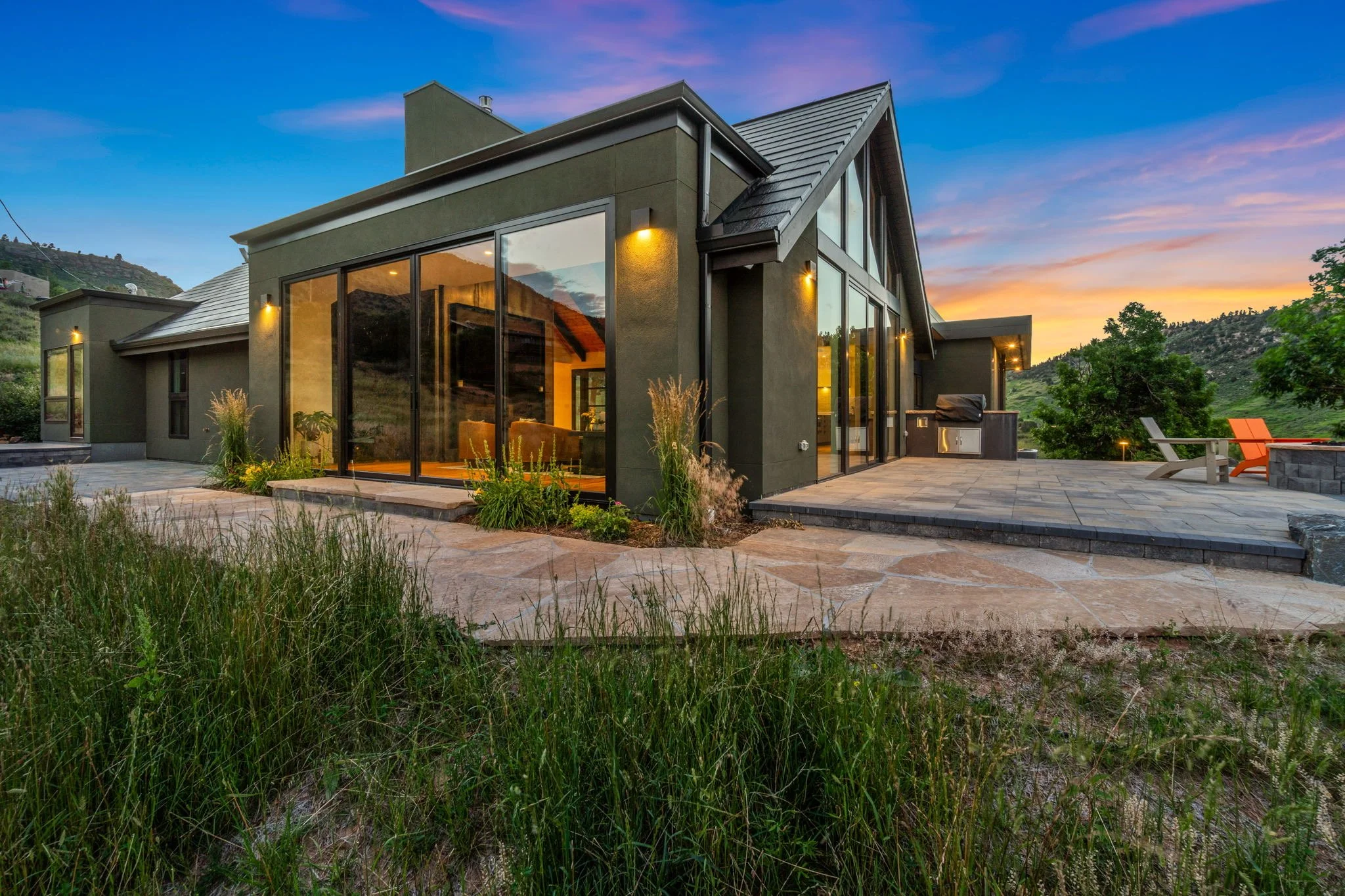
Building in Colorado’s mountain environments comes with a unique set of challenges. Higher elevations, colder winters, intense sun exposure, snow loads, wind, and wildfire risk all put more pressure on a home than typical Front Range or urban construction. That’s why you’ll often hear builders and architects talk about “performance,” especially when it comes to mountain homes.
But what does mountain home performance actually mean, and why does it matter so much?
For homeowners planning a custom build or major remodel in the mountains, understanding performance early can make the difference between a home that feels comfortable, durable, and predictable and one that becomes expensive to maintain or uncomfortable to live in. This guide breaks down what mountain home performance really means, why it matters in Colorado, and how thoughtful planning leads to better long-term results.
What “Mountain Home Performance” Really Means
At its core, mountain home performance is about how well a home functions in its environment over time. It is not a single feature or product, and it is not limited to energy efficiency alone. A high-performing mountain home is one that maintains comfort through extreme temperature swings, holds up to moisture and snow, manages energy use responsibly, and protects the investment long after construction is complete.
Performance is about the entire system working together. The building envelope, mechanical systems, materials, and design decisions all play a role. When one piece is overlooked, the weaknesses tend to show up faster in mountain conditions than they would elsewhere.
In practical terms, performance shows up in how the home feels day to day. Rooms stay consistently comfortable. Windows do not create cold drafts. Snow and moisture are managed instead of causing long-term damage. Utility costs remain predictable. These outcomes are rarely accidental. They are the result of intentional decisions made early in the process.
The Core Elements of a High-Performance Mountain Home
While every project is different, high-performing mountain homes tend to share a few core principles. These elements work together to create homes that are resilient, comfortable, and built for Colorado’s demanding conditions.
A Strong Building Envelope
The building envelope is the foundation of performance. It includes insulation, air sealing, windows, doors, and how all of those components connect. In mountain environments, even small gaps or inconsistencies can lead to major heat loss, moisture intrusion, or comfort issues.
A well-designed envelope controls air movement, limits thermal bridging, and keeps interior conditions stable despite what’s happening outside. This is especially important in areas with cold winters, strong winds, and significant temperature swings between day and night. Once a home is built, improving the envelope is difficult and expensive, which is why these decisions matter so much during design and pre-construction.
Energy Efficiency That Supports Comfort
Energy efficiency in a mountain home should support comfort first, not just lower utility bills. Mechanical systems need to be sized correctly for the climate, the home’s layout, and the insulation strategy. Oversized systems can be just as problematic as undersized ones, leading to uneven temperatures and reduced system lifespan.
High-performing homes use energy thoughtfully. Heating and cooling systems work in balance with the envelope rather than fighting against it. This results in quieter operation, more consistent temperatures, and a home that feels comfortable no matter the season.
Comfort and Indoor Air Quality
Comfort goes beyond temperature. Indoor air quality plays a major role in how a home feels, especially at higher elevations. Tightly built homes require proper ventilation strategies to ensure fresh air without sacrificing efficiency.
When ventilation is planned correctly, homeowners experience fewer drafts, better humidity control, and healthier indoor environments. In mountain homes that may be occupied seasonally or left vacant for periods of time, these systems become even more important.
Durability in Harsh Conditions
Mountain homes face constant exposure to snow, ice, sun, and moisture. Materials and assemblies need to be selected with longevity in mind. Freeze-thaw cycles, ice dams, and prolonged snow coverage can all take a toll if durability is not addressed early.
High-performance homes manage water effectively, protect structural components, and use materials suited for the climate. This reduces maintenance issues and helps the home age gracefully rather than deteriorating prematurely.
Site-Specific Design Decisions
No two mountain sites are the same. Orientation, wind exposure, access, snow management, and wildfire considerations all influence how a home should be designed and built. Performance improves when the design responds to the site instead of forcing a standard solution onto complex terrain.
This is where collaboration between the homeowner, architect, and builder becomes especially important. Site-specific decisions often have long-term performance implications that cannot be corrected once construction is underway.
Why Code Compliance Is Not Enough in Mountain Homes
Building codes provide a baseline, but they are not a guarantee of performance. Codes are written to apply broadly across regions, not to account for the microclimates and unique challenges found in Colorado’s mountain communities.
A home can meet code and still struggle with comfort, durability, or energy use in a high-altitude environment. Mountain homes often benefit from going beyond minimum requirements, particularly when it comes to insulation strategies, air sealing, window performance, and moisture control.
Viewing code as a starting point rather than the finish line allows homeowners to make informed decisions that better protect their investment.
Common Performance Mistakes in Mountain Construction
Many performance issues are not caused by bad intentions, but by timing and coordination. Some of the most common challenges include prioritizing aesthetics without fully accounting for thermal performance, undersizing or oversizing mechanical systems, or attempting to “value engineer” critical components late in the process.
Performance is hardest to fix once construction has begun. Changes made late often come with added cost or unintended consequences. This is why early planning and alignment are so important, especially in complex mountain builds.
How Build3 Approaches Mountain Home Performance
At Build3, performance is not treated as an upgrade or a checkbox. It is built into the process from the beginning. Performance considerations are addressed during pre-construction, when there is time to evaluate trade-offs, coordinate with architects and engineers, and align design intent with real-world conditions.
Our approach focuses on how the home will live, not just how it will look. Decisions are guided by comfort, durability, and long-term value, with the understanding that mountain homes demand more thoughtful planning than typical residential projects.
Performance is most effective when it supports the way homeowners actually use their homes, whether that means full-time living, seasonal use, or something in between.
Performance as the Foundation of Building in Colorado’s Mountains
Mountain home performance is not about chasing trends or buzzwords. It is about building homes that function well in challenging environments and continue to do so for decades. For Colorado homeowners considering a custom home or major remodel in the mountains, understanding performance is one of the most important first steps.
This guide is the starting point for a broader conversation about building in Colorado’s mountain regions. As part of our upcoming Ultimate Guide to Building a Mountain Home in Colorado, we will continue to explore topics like pre-construction planning, building envelope strategies, and common pitfalls to avoid.
A well-performing home starts with informed decisions, made early and carried through every phase of the build.